




Ordering Print and Packaging from Türkiye: An Import Guide for International Buyers 2026
When a coffee chain in Europe sources paper cups, an e-commerce brand in London orders mailer boxes or an agency in New York prints a catalogue, the unit price is no longer the only thing that counts. Customs duty, lead time, the documents required at the border and whether the product can legally be sold in the destination country shape the total cost at least as much as the unit price. This guide answers those four questions product by product for international buyers considering print and packaging from Türkiye. We compiled the figures from official tariff databases and legal texts, and we state plainly where there is no advantage as well as where there is one.
According to 2025 data from the Turkish Packaging Manufacturers Association (ASD), the sector closed the year with $7.3 billion in exports and a $3.03 billion trade surplus; export volume grew 7% to 3.4 million tonnes. The five largest markets, in order, are the United Kingdom, Germany, the United States, Italy and Iraq. In other words, the three markets covered in this guide — the EU, the UK and the US — are already where most Turkish packaging goes, and many buyers have used this supply route for years.
Why Türkiye? Four Concrete Reasons
Proximity and speed
Most of Europe can be reached by road within a few days. The weeks a sea shipment from the Far East spends in transit mean capital tied up in stock and missed campaign dates.
Customs union
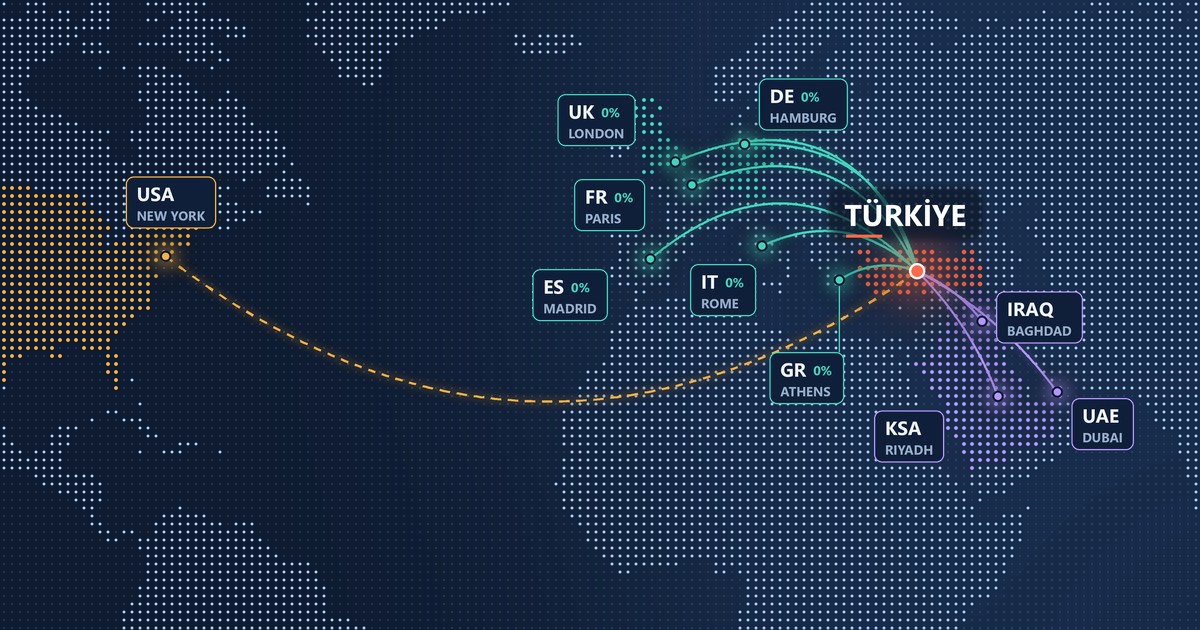
Türkiye has been in a customs union with the EU since 1996. Industrial goods enter the EU without customs duty under an A.TR movement certificate, and a free trade agreement with the UK has been in force since 2021.
Scale and production base
Offset, digital, flexo and screen printing, as well as corrugated board, cartons, cups and napkins, are all produced in the same country, often in the same region. That makes it easier to consolidate multi-item orders into one shipment.
A supply chain used to compliance
The Turkish Food Codex regulation on food contact materials was drafted in line with EU legislation. Manufacturers who export to Europe regularly handle requests such as declarations of compliance, migration tests and FSC/PEFC chain of custody as routine work.
Lead Time: Days, Not Weeks
| Destination | Mode | From Türkiye | From China |
|---|---|---|---|
| Europe (Germany, France, Netherlands…) | Road (truck) | 2–7 days | No road link; sea 35–45 days |
| Europe | Air freight | 24–48 hours | 5–8 days |
| US East Coast | Sea (FCL/LCL) | 16–22 days | 25–35 days |
| US | Air freight | 1–4 days | 3–7 days |
This difference is decisive for seasonal and campaign-driven print. A Christmas catalogue or a summer cup order sourced from the Far East has to be finalised months in advance; with a road shipment from Türkiye the design can still change in the last weeks. Ordering smaller quantities more often reduces stock sitting in the warehouse and the risk of print becoming obsolete.
European Union: The Customs Union and the A.TR Certificate
The customs union between Türkiye and the EU entered into force on 31 December 1995 under Association Council Decision 1/95. It covers industrial goods and the industrial component of processed agricultural products; agricultural products, coal and steel are outside it. If a covered product is in free circulation in Türkiye and the shipment is accompanied by an A.TR movement certificate, no customs duty is payable at EU customs.
- The A.TR is completed by the exporter and endorsed by Turkish customs; the buyer does not need to apply for anything.
- The certificate must be presented to customs in the destination country within four months of its date of issue.
- The A.TR removes customs duty only. Import VAT is still payable at the destination country's rate; VAT-registered businesses can usually reclaim it as input tax.
- It applies to industrial goods such as paper and board products, plastics and ceramics; it cannot be used for agricultural products such as sugar.
- The A.TR is not valid in the United Kingdom. Shipments to the UK need a separate proof of origin (explained below).
Small parcels have changed too: on 1 July 2026 the EU abolished the customs duty exemption for consignments up to €150 and introduced a temporary flat duty of €3 per tariff item on distance sales to consumers (Council Regulation 2026/382, until 1 July 2028). Goods covered by the customs union are exempt from this flat duty as well, provided their VAT is not collected through IOSS and they are declared with a full H1 declaration. Business-to-business bulk shipments go through a standard customs declaration anyway, with the A.TR attached to it.
Duty Rates by Product: EU, UK and US
Let us start with a fact many guides skip: the EU and the UK already apply 0% duty to paper and board products (HS chapter 48) and printed matter (chapter 49), whatever the country of origin. So for a business card or a cardboard box the duty advantage of an A.TR is zero — Türkiye's edge on these products comes from lead time, freight and flexibility. Where the A.TR really saves money is on products classified as plastics, ceramics, glass and cosmetics: here the rate for third countries ranges from 4% to 12% and falls to zero for goods of Turkish origin.
| Product group | HS code | EU standard | EU – with A.TR | UK standard | UK – Turkish origin | US general rate* |
|---|---|---|---|---|---|---|
| Business cards, leaflets, catalogues, posters | 4911 | 0% | 0% | 0% | 0% | Free |
| Books and magazines | 4901 | 0% | 0% | 0% | 0% | Free |
| Envelopes and pouch envelopes | 4817 | 0% | 0% | 0% | 0% | Free |
| Cartons, shipping boxes, paper bags | 4819 | 0% | 0% | 0% | 0% | Free |
| Notepads, presentation folders | 4820 | 0% | 0% | 0% | 0% | Free |
| Paper cups | 4823.69 | 0% | 0% | 0% | 0% | Free |
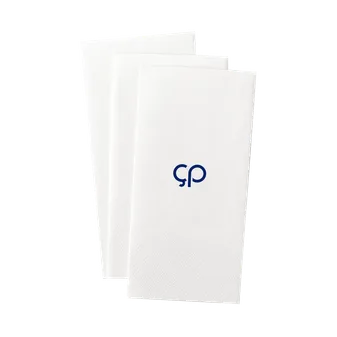
| Paper napkins | 4818.30 | 0% | 0% | 0% | 0% | Free |
| PET cups | 3924.10 | 6.5% | 0% | 6% | 0% | 6.5% |
| Porcelain mugs | 6911.10 | 12% | 0%** | 12% | 0%** | 14% (hotel and restaurant ware 25%) |
| Ceramic mugs | 6912 | 5–9% | 0%** | 4–6% | 0%** | 10% |
| Glass mugs and tumblers | 7013.37 | Up to 11% | 0%** | 10% | 0%** | 5–28.5% by unit value |
| Wet wipes (lotion-impregnated) | 3307.90 | 6.5% | 0% | 6% | 0% | 5.4% |
| Sugar sticks | 1701.99 | €419/tonne | No preference | £35/100 kg | No preference | Tariff-rate quota |
* The US column shows only the general (MFN) rate. Since 24 July 2026 an additional 12.5% has applied on top of it to goods of Turkish origin; see the US section for details. ** The zero rate for mugs and glassware depends on the body being of Turkish origin. Wet wipes impregnated with a lotion containing soap or detergent fall under heading 3401, where the standard rate is already zero in all three markets. Because exact classification depends on product composition, for large orders we recommend getting an opinion from your customs broker and, in the EU, a Binding Tariff Information (BTI) ruling.
Our Products That Can Ship Duty-Free
Below we have grouped W2P's products by their customs status in the table. Each card links to the product page, where you can choose size, paper and quantity, see the price instantly and place your order directly.
Printed stationery and corporate print — 0% in the EU and UK
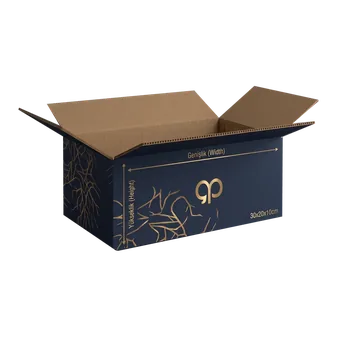
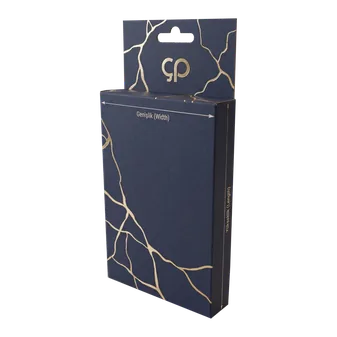
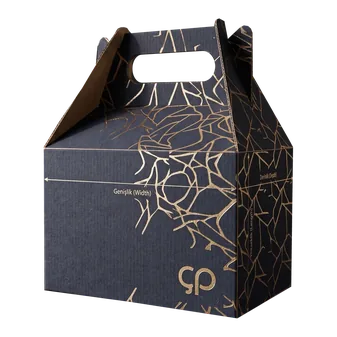
Paper and board packaging — 0% in the EU and UK
Products where the A.TR delivers real savings
HoReCa products — mind the rules
Rules Before Customs: Product Compliance in the EU
Zero duty does not mean a product can be sold in the EU. Especially for food contact and single-use items, product legislation applies independently of customs, and responsibility often rests with the importer in the EU. 2026 is a busy year in this respect: the new packaging regulation started to apply in August, and the deforestation regulation starts in December.
Single-Use Plastics Directive (2019/904)
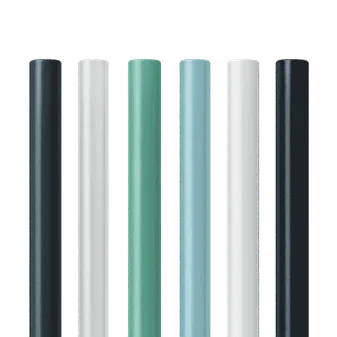
Plastic straws, stirrers, plates and cutlery have been banned from the EU market since 3 July 2021. The ban also covers bio-based plastics such as PLA. Paper and glass straws are allowed.
“Plastic in product” marking (2020/2151)
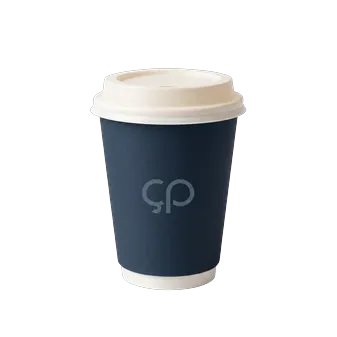
Paper cups lined with PE, PP or PLA, as well as PET cups and wet wipe packaging, must carry the standard marking with the turtle logo. Because the marking is part of the print design, state the destination country when you order.
Food contact (1935/2004 and 10/2011)
Cups, napkins and food boxes require a declaration of compliance; for plastic-coated products a migration test report under Regulation 10/2011 supports that declaration.
Packaging regulation PPWR (2025/40)
Applies since 12 August 2026. PFAS limits for food contact packaging are now in force; the importer must verify and keep the manufacturer's declaration of conformity and technical documentation. Extended producer responsibility registration is also required country by country.
Deforestation regulation EUDR (2023/1115)
Amendment 2025/2650 removed printed products (chapter 49) from scope; paper and board packaging (chapter 48) remains in scope. It starts on 30 December 2026 for large and medium-sized companies and on 30 June 2027 for micro and small companies.
Cosmetics regulation (1223/2009)
Lotion-impregnated wet wipes count as cosmetic products in the EU. Placing them on the market requires an EU-based responsible person, a product safety report and a CPNP notification; plan these steps before ordering.
Check the material when ordering straws
For straws going to EU countries and the UK, choose paper or glass, not plastic or PLA. Plastic straws are suitable for markets without this ban, such as the US. If in doubt, write the destination country in the order note; we will confirm the material accordingly.
United Kingdom: The Free Trade Agreement and Origin Declarations
When the UK left the EU customs union on 1 January 2021, it signed a separate free trade agreement with Türkiye. The agreement preserved zero duty on industrial goods, but the logic is different: origin counts here, not free circulation. The product must have undergone sufficient working or processing in Türkiye. Converting paper reels into boxes or catalogues meets this condition; merely printing on an imported product usually does not.
- The A.TR is not accepted in the UK. Proof of origin is an origin declaration on the invoice or an EUR.1 movement certificate.
- The origin declaration uses the standard wording in the agreement and states that the products are of Turkish preferential origin; above a certain value an approved exporter number is required.
- Import VAT is 20%. VAT-registered importers can use postponed VAT accounting to account for it on their VAT return instead of paying at the border.
- For consumer consignments up to £135, VAT is collected by the seller at the point of sale.
- In England the supply of single-use plastic straws has been restricted since October 2020; as in the EU, choose paper or glass straws.
- Businesses importing more than 10 tonnes of plastic packaging a year are liable for Plastic Packaging Tax; factor this into PET cup orders.
United States: 2026's Shifting Tariff Map
US tariffs have changed far faster than European ones over the past twelve months. The base rates stayed the same: for almost all paper, board and printed products the US general duty rate is “free”, i.e. zero. What changed were the additional duties on top and the small-shipment exemption.
US import rules timeline 2025–2027
De minimis suspended
Duty-free entry for shipments up to $800 was suspended for all countries; every parcel now requires a declaration.
Supreme Court ruling
Country-specific additional tariffs based on IEEPA were found unlawful and removed. The de minimis suspension was continued by a separate order.
Section 122 temporary tariff
A 150-day global temporary surcharge replaced the removed tariffs; it expired on 24 July.
Section 301 forced-labour duties
Additional duties of 10% or 12.5% started applying to 60 economies. Türkiye is subject to 12.5%; for China this rate is added on top of existing Section 301 duties.
De minimis suspension upheld
The US Court of International Trade found the suspension of the $800 exemption lawful.
Statutory repeal
Under legislation passed by Congress, the de minimis exemption also ends by law on this date.
In practice, for a carton or catalogue shipped from Türkiye to the US this means a general rate of zero plus a 12.5% additional duty. The same box from China carries the Section 301 duty in place since 2018 (25% on corrugated boxes) together with the new 12.5%. There is one more opportunity for printed work bound for the US: the exemptions from the additional duty include “informational materials” such as publications and posters. Check with your customs broker whether your book, magazine and poster orders qualify for this exemption.
- Merchandise Processing Fee (MPF): 0.3464% of customs value; its minimum and maximum are updated every year.
- Harbor Maintenance Fee (HMF): 0.125% of value, for goods arriving by sea only.
- Shipments up to $2,500 clear under an informal entry; above that, a formal entry and a customs bond are required.
- The Importer of Record can be the buyer or, with DDP delivery, the supplier's customs agent; settle this at the quotation stage.
- For cups and boxes in contact with food, ask for a declaration of compliance with the relevant FDA 21 CFR provisions.
Step by Step: Ordering from Abroad
- Choose size, material and quantity on the product page; the price is calculated instantly. The same process works in nine languages.
- Upload your print file. During file checking we review dimensions, bleed and colour mode and come back with a correction proposal if needed.
- Write the destination country and delivery term (e.g. DAP or DDP) in the order note. We confirm country-specific requirements such as straw material and cup marking based on this information.
- State up front whether you need a declaration of compliance for food contact products, an A.TR for the EU or an origin declaration for the UK.
- Production starts after approval; production time varies by product, printing method and quantity.
- The commercial invoice, packing list and relevant movement or origin document are issued with the shipment.
- In the destination country your customs broker or the carrier files the declaration; the goods are released once VAT and any duties are paid.
Document Checklist
| Document | EU | UK | US |
|---|---|---|---|
| Commercial invoice and packing list | Required | Required | Required |
| A.TR movement certificate | Required (industrial goods) | Not valid | Not valid |
| Origin declaration or EUR.1 | Case by case for agricultural products | Required for zero duty | Origin stated on the invoice |
| Food contact declaration of compliance | Required | Required | FDA compliance declaration recommended |
| PPWR declaration of conformity and technical file | Required (since 12 August 2026) | Not required | Not required |
| EUDR due diligence statement (DDS) reference | For chapter 48 products, from 30 December 2026 | Not required | Not required |
Conclusion
The advantage of sourcing print and packaging from Türkiye does not come from a single line item but from the sum of several. On paper and printed products duty is zero wherever they come from; the gain here is road delivery in a few days, the flexibility to work in small batches and paperwork that does not hold goods at the border. For products classified as plastics, ceramics, glass and cosmetics, a duty saving of 6% to 12% comes on top. In the US, Türkiye's 12.5% additional duty remains clearly below the cumulative burden carried by the same products from China. Choose the right material and plan the documents from the start, and you can build a predictable supply chain without surprise costs.
See your price now
On our product pages the price is calculated the moment you choose size, material and quantity; just add your international delivery and document requirements to the order note. For questions, write to us via our contact page.
About this guide
This article is for information only and is not legal or customs advice. Rates were taken from the EU TARIC, UK Trade Tariff and USITC HTS databases as of 26 September 2026, and sector data from ASD's 2025 foreign trade report. For exact classification and duty calculation, consult your customs broker.
