Base and Lid Box
| Selection | Quantity | Total Cost | Unit Cost |
|---|---|---|---|
100 Ad. | £150.91 | £1.509065 | |
250 Ad. | £201.63 | £0.806523 | |
500 Ad. | £257.88 | £0.515757 | |
1000 Ad. | £366.02 | £0.366021 | |
1500 Ad. | £487.22 | £0.324814 | |
2000 Ad. | £608.42 | £0.304211 | |
3000 Ad. | £850.82 | £0.283608 | |
4000 Ad. | £1093.22 | £0.273306 | |
5000 Ad. | £1335.63 | £0.267125 | |
8000 Ad. | £2062.83 | £0.257854 | |
10000 Ad. | £2512.81 | £0.251281 | |
20000 Ad. | £4884.59 | £0.244229 | |
40000 Ad. | £9602.02 | £0.240051 | |
50000 Ad. | £11677.81 | £0.233556 | |
100000 Ad. | £23144.95 | £0.231449 |
Base and Lid Box — Custom Size Printed Two-Piece Carton Box
Design the Unboxing Moment with a Base and Lid Box
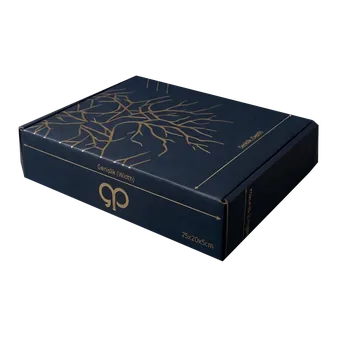
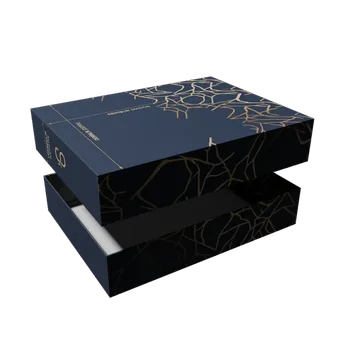
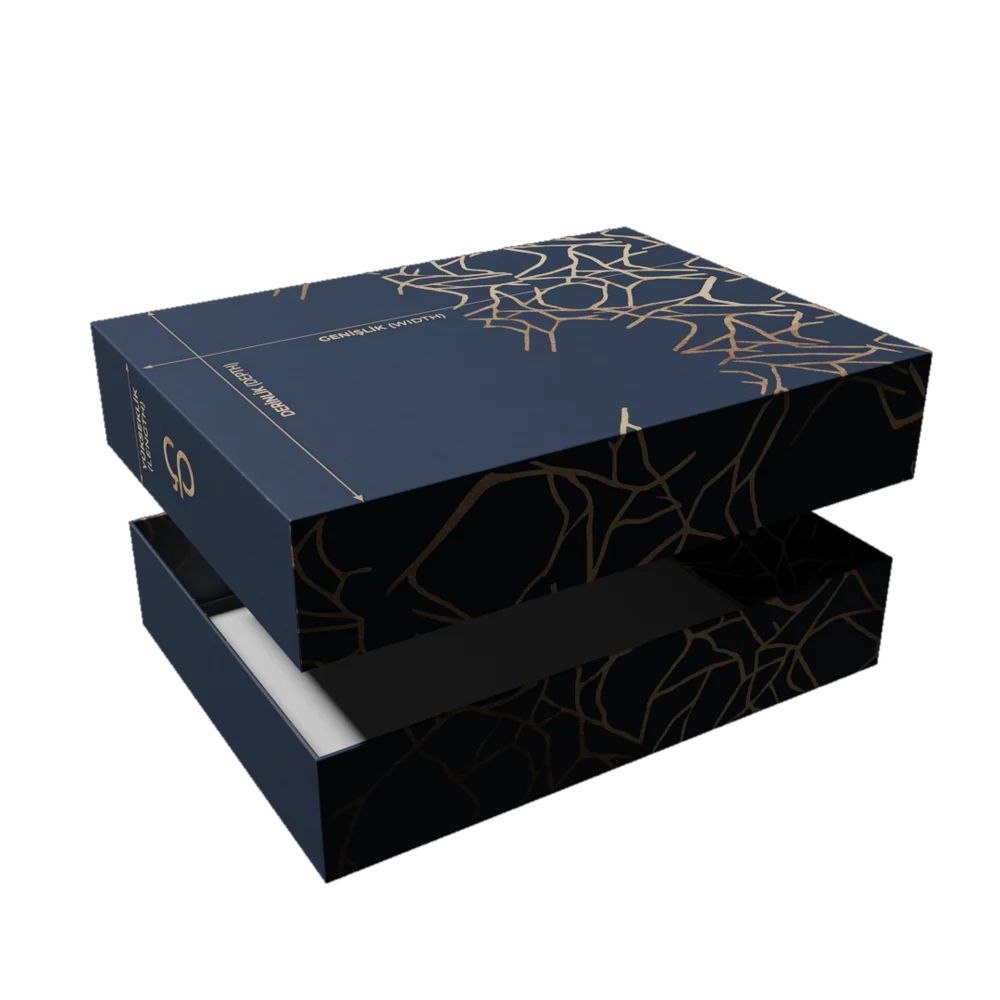
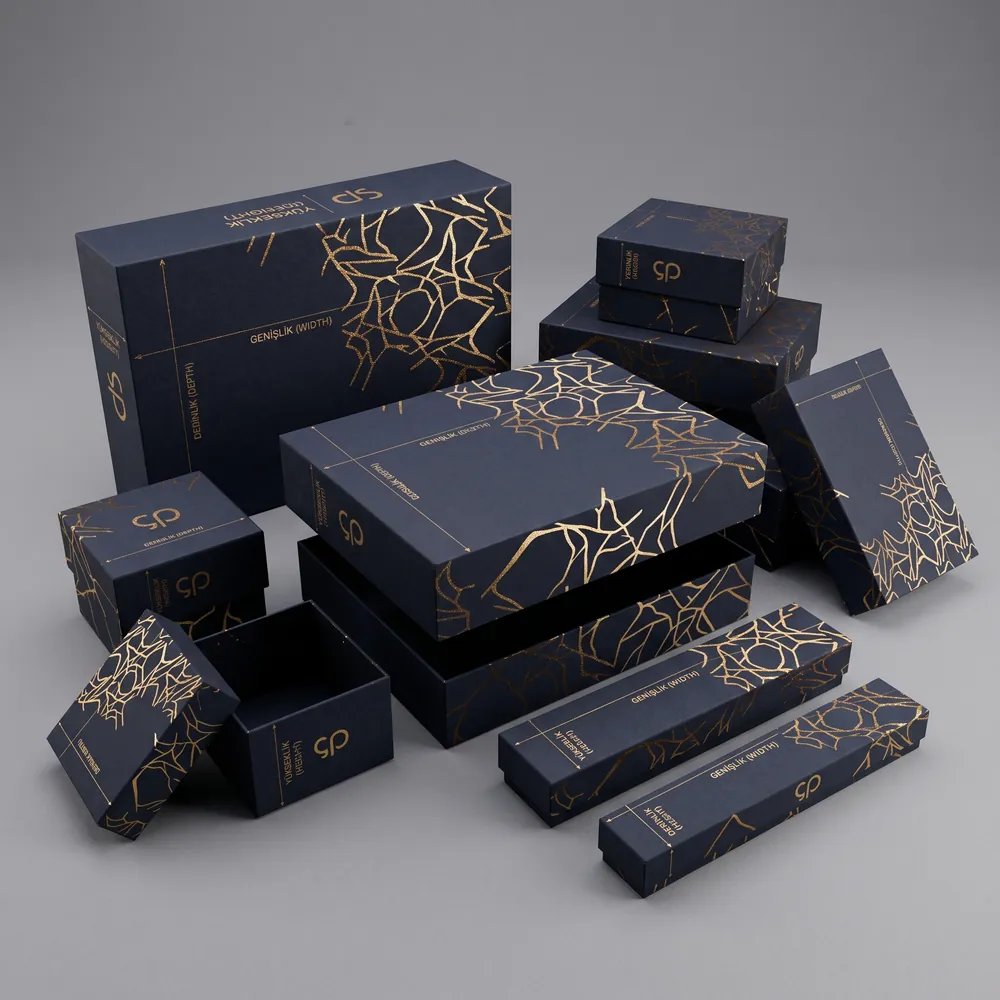
A base and lid box is two-piece packaging made of a separate base and a lid that slides fully over it. The lid lifting slowly off the base creates the unboxing moment typical of gift boxes and premium packaging; the product feels valuable even before it comes out of the box. Unlike boxes folded from a single piece, the lid wraps the base on all four sides, doubling the walls and giving the box a solid, full-bodied look. On this page we produce your box in the size you choose: you enter the dimensions, see the base and lid instantly on a 3D model, pick the board and print, and read the price without waiting for a quote.
Why a Custom Size Box?
Placing a product in a stock-size box means filling gaps with padding and leaving the unboxing moment to a borrowed box. A box sized to the product gives you this instead:
- The product stays in place: because the base fits the product, nothing slides or knocks inside; when the lid comes off, the product looks exactly as planned.
- Less padding: with no unnecessary volume left, foam inserts and paper shred are needed far less.
- Easier shipping: a box sized to the product packs more neatly inside the shipping carton, reducing transport volume and cost.
- A stronger brand experience: the top and sides of the lid and the inside of the base are separate printing areas you can plan for your logo, pattern and thank-you message.
Design Your Base and Lid Box on a 3D Model
Assemble the Base and Lid on Screen Before Production
In a two-piece box a design mistake costs twice: the logo on the lid does not line up with the pattern on the base, the lid edge covers the text. This page moves those decisions to before production. As soon as you enter the dimensions, the base and lid are built on screen as two separate real 3D models; both are created from the real die-lines generated from your dimensions and the caliper of the board you select. When you change the size or the board, both pieces rebuild together.
- Open and close the lid: watch the lid lift off the base and settle back into place on the model; see the unboxing moment as your customer will.
- Two pieces, one drawing: the base and lid templates are generated side by side on the same page and can be downloaded free of charge as PDF, SVG or PNG, with cut and crease lines.
- Design, upload, see the mockup: place your artwork on both templates and upload it to the page; watch the printed base and lid together in a 3D mockup.
- Design with AI: give the downloaded die-line to an AI image tool, ask it to create artwork inside the base and lid templates and upload the result to review it on the 3D model right away.
Assembling the box on screen is faster and cheaper than waiting for the first sample. How the lid and base designs meet, whether the product fits and what shows when the lid comes off are settled before production starts.
Two-Piece Structure: Base and Lid
The base and lid are cut from two separate boards that are not connected; each is a tray formed by folding its corners inwards. The main features of this structure:
- A lid covering the whole base: the lid comes down the full height of the base; when closed, the side walls are double and the box looks like a single piece from outside.
- Lid allowance based on caliper: the lid is made larger than the base by an allowance calculated from the board caliper you choose; when you pick another board, the allowance is recalculated automatically and the lid still fits the base.
- Corners folded into shape: the corner flaps fold inwards and tie the walls together, keeping the box’s shape with a flat base and clean edges.
- Inside and outside printing areas: when the lid comes off, the inside of the base and the underside of the lid are visible, offering extra printing space for a message or pattern for the unboxing moment.
The box is produced in widths and lengths from 5 to 50 cm; the height is limited relative to the short side of the base, so the form stays low and sturdy. The fit of the lid is confirmed with a physical sample before series production.
How to Choose Board Thickness
Here, Thickness Matters Twice
In a two-piece box, board thickness decides both the stiffness of the box and how the lid sits on the base. The first thing to know is that grammage is not thickness. Grammage measures the weight of one square metre of board; thickness depends on the board’s bulk. Because coating compresses the surface, coated boards are heavy but thin, while multi-layer bristol and folding boxboard are noticeably thicker at the same weight. The options on this page show the difference clearly: at the same 350 g/m², gloss coated board is 0.285 mm while bristol is 0.49 mm. Since the lid allowance is calculated from this thickness, the right board means the right fit.
Board Options and Thicknesses
We offer three board families. The thickness of the grammage you choose is applied directly to both pieces’ die-lines and to the 3D model.
| Board | Grammage range | Thickness at 350 g/m² | Main strength |
|---|---|---|---|
| Coated (gloss, matt, black, kraft surface) | 250–350 g/m² | 0.285 mm (gloss) · 0.358 mm (matt) | A coated surface that prints colours saturated; light products and photo-heavy, glossy-looking boxes. |
| Bristol | 250–450 g/m² | 0.49 mm | The thickest option at the same grammage; boxes that feel full and rigid in the hand, with a gift-like quality. |
| Folding boxboard (Normprint, Exprint, LuxTriplex) | 180–550 g/m² | 0.45 – 0.475 mm | Multi-layer structure with a smooth printing surface and high stiffness; with the widest grammage range, flexible up to heavy and large boxes. |
Kraft and black surfaces are also available in the coated family. On these grounds there is no white base beneath CMYK printing, so light tones disappear and colours shift; designs built with few colours and high contrast give better results.
Four Questions That Determine Thickness
The thickest board is not always the best box; board thicker than necessary increases both cost and weight. Answer these questions before you decide:
- How large is the box and how heavy is the product? for small, light products 250–300 g/m² gives enough stiffness; for boxes with a wide base or carrying heavy products, bristol or folding boxboard of 350 g/m² and above keeps the base and walls from bending.
- How long will the box be kept? in gift and set boxes that are kept, opened and closed again and again, thicker board keeps the corners and the lid in shape for longer; for single-use packaging, thinner board is enough.
- How should the lid sit? since the lid allowance grows with thickness, you can compare the fit by trying different boards on the 3D model; with thicker board the box takes on a fuller, more substantial look.
- How important are print and surface feel? coated board stands out for photos and vivid colour, bristol for a full, rigid hand feel, and folding boxboard for a balance of both with the widest grammage choice.
If you want to learn more about paper types, grammage and bulk, read the Paper Weight and Types Guide on our blog.
Printing and Finishing Options
Every choice that shapes the look of your box is on one screen; the finish you choose is applied to both the base and the lid:
- Colours: print options from 2+0 to 5+1; the number after the plus sign shows the printing on the inside of the board.
- Film lamination: matt, gloss or soft-touch; soft-touch gives a base and lid box a velvety, premium feel.
- Varnish: spot varnish, embossed varnish and gloss, matt or satin varnish make the logo and patterns on the lid stand out.
- Embossing and foil: emboss or deboss leaves a mark on the lid you can feel, while foil adds a metallic, premium brand detail.
Who Is a Base and Lid Box For?
For every brand that wants to present its product like a gift, this box type makes the packaging part of the experience. The most common uses:
- Gifts and corporate promotion: holiday sets, corporate gifts and event kits; a strong first impression with a logo and foil on the lid.
- Cosmetics and personal care sets: sets presenting several products together; a premium feel with soft-touch lamination.
- Food and confectionery: chocolate, Turkish delight, biscuits and special-occasion treats; the product looks neat when the box is opened.
- Textiles and accessories: scarves, ties, shirts and jewellery; wide-based boxes that present the product carefully placed, without folding it.
Recyclable Carton Packaging
Carton packaging is a material that can be returned to the paper stream. With both base and lid made entirely of board, this box delivers a premium presentation without a plastic insert tray or a magnetic lid; since the packaging is a single material, no separation is needed for recycling. A box sized to the product means less material and less padding.
Enter your size, open and close your base and lid box on the 3D model, choose the board, download the die-line to prepare your design for the base and lid, and upload it to watch the result in the mockup — you see the final box before you place the order.