

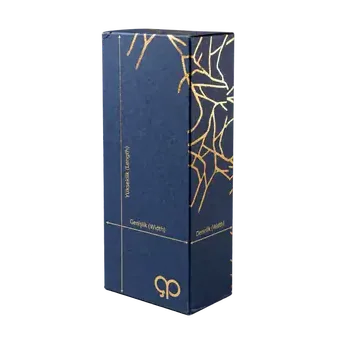
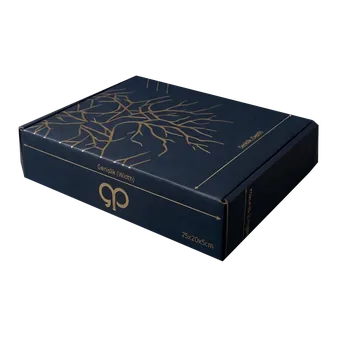
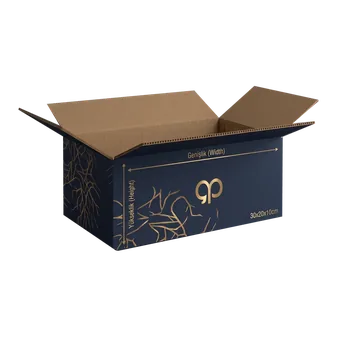
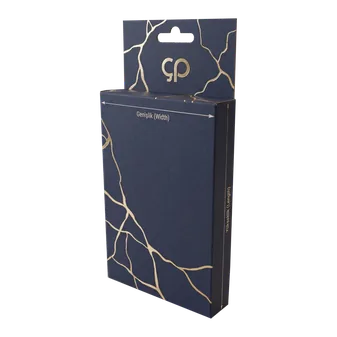
Printed Shipping Box
| Selection | Quantity | Total Cost | Unit Cost |
|---|---|---|---|
100 Ad. | £211.28 | £2.112847 | |
250 Ad. | £267.04 | £1.068176 | |
500 Ad. | £359.98 | £0.719952 | |
1000 Ad. | £545.84 | £0.545841 | |
1500 Ad. | £731.71 | £0.487803 | |
2000 Ad. | £917.57 | £0.458785 | |
3000 Ad. | £1289.3 | £0.429766 | |
4000 Ad. | £1661.03 | £0.415257 | |
5000 Ad. | £2032.76 | £0.406551 | |
8000 Ad. | £3161 | £0.395125 | |
10000 Ad. | £3913.16 | £0.391316 | |
20000 Ad. | £7673.98 | £0.383699 | |
40000 Ad. | £15195.61 | £0.37989 | |
50000 Ad. | £18956.43 | £0.379129 | |
100000 Ad. | £37760.51 | £0.377605 |
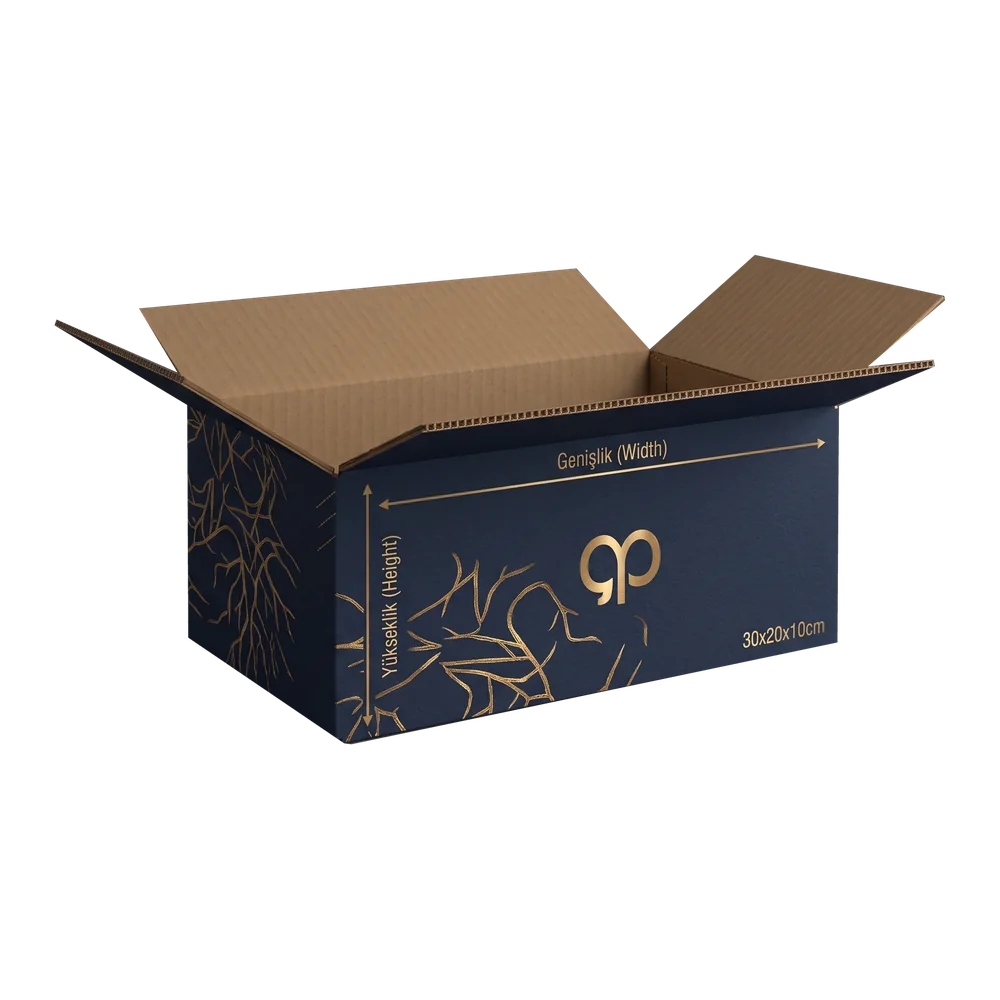
Printed Shipping Box — Custom Size FEFCO 0201 Corrugated Box
A Printed Shipping Box Carries Your Brand on Every Shipment
A printed shipping box is the largest advertising surface you have while your product travels from the warehouse to your customer. Every side of the box is seen — on the shelf, stacked on a pallet and at the door; a plain brown carton wastes all of those moments. A custom printed box carrying your logo, your colours or simply your company details protects the product and tells people who you are. On this page we produce your box to the FEFCO 0201 standard in the size you choose: you enter the dimensions, see the box instantly as a 3D model, pick the flute thickness and print, and read the price without waiting for a quote.
Why a Custom Size Instead of a Stock Size?
Buying the closest stock size looks practical at first, but you pay for the empty space again with every shipment. A box sized to your product cuts that cost in several places at once:
- Lower volumetric weight and freight: carriers convert volume into volumetric weight (length × width × height divided by a carrier-specific factor), so every unnecessary centimetre shows up on the invoice.
- Less void fill: a box that fits the product leaves no gap to fill with bubble wrap, paper shred or air pillows.
- Less damage: a product that cannot move inside is far less affected by impact and vibration in transit.
- Ready for new rules: from 2030 the EU Packaging and Packaging Waste Regulation (PPWR) limits empty space in transport and e-commerce packaging to 50% of the total volume; for brands shipping to the EU, a custom size is no longer a preference but a compliance requirement.
Design Your Printed Box on a 3D Model
Build the Box on Screen Before You Order
The most expensive mistake when ordering printed boxes is seeing the box only after it has been produced: the size does not fit, the logo lands on the flap joint, the text is split by a fold line. This page moves that risk to before production. As soon as you enter the dimensions, your box is built on screen as a real 3D model. The model is not a stock image with a logo pasted on; it is created from the real die-line generated from your dimensions and the flute thickness you select, and it rebuilds instantly when you change the size or the flute.
- Inspect every angle: rotate the box to see its four sides and its top and bottom flaps; open and close the flaps to watch how the box is erected.
- See the thickness in section: the thickness of the chosen flute is applied directly to the model, so you see the difference between 1.5 mm micro flute and 7 mm double wall before you decide.
- Instant die-line: the template for your dimensions is generated in seconds and can be downloaded free of charge as PDF, SVG or PNG, with cut and crease lines.
- Design, upload, see the mockup: place your artwork on the die-line and upload it to the page; watch your box as it will look after production in a 3D mockup. Because the model and the die-line come from the same layout, the design fits the box exactly.
- Design with AI: give the downloaded die-line to an AI image tool, ask it to create artwork inside the template, then upload the result and review it on the 3D model right away.
Folding the box on screen is faster and cheaper than waiting for the first sample. Design approval, whether the product fits and which side carries the logo are all settled before production starts.
How to Choose Box Thickness
Thickness Should Be Considered Together with Flute Geometry
What makes a box strong is less the thickness of the paper than its geometry. Corrugated board consists of two flat liners with a fluted paper between them; three sheets that bend easily in your hand become, once bonded together, a beam carrying many times its own weight. Low, dense flutes support the surface well, so they resist crushing and offer a smooth base for printing. Tall flutes and double-wall structures thicken the section and increase vertical stacking strength and shock absorption. The right thickness is the point between these two extremes that suits your product.
Flute Options and Thicknesses
We offer four flute types. The page opens with B flute as a balanced starting point; when you change the selection, both the price and the 3D model update immediately.
| Flute | Thickness | Structure | When to choose it |
|---|---|---|---|
| E Flute (Micro) | 1.5 mm | Single wall, very dense flutes | Light products and jobs where print quality comes first. Gives the flattest surface and the lowest volumetric weight. |
| B Flute (Fine) | 3 mm | Single wall | Shipping medium-weight products. The most balanced option between print quality and transport strength. |
| EB Flute (Micro double wall) | 4.5 mm | Double wall, E + B | Fragile products and larger boxes. Adds stiffness and shock absorption while keeping a fine printing surface. |
| B+C Flute (Double wall) | 7 mm | Double wall, B + C | Heavy products, long-term stacking and demanding transport. The highest stacking and puncture resistance. |
For every flute type you can choose a kraft (brown) or white liner. A white liner makes printed colours look brighter; a kraft liner gives a natural look with a strong recycling message.
Five Questions That Determine the Right Thickness
‘Make it thick’ is not always the right answer; a box thicker than necessary is paid for twice, in material and in volumetric weight. Answer these questions before you decide:
- How heavy is the product and how does the load sit in the box? for heavy products that put point loads on the base, double wall (EB or B+C) is the choice; for light, evenly spread loads, single wall (E or B) is usually enough.
- Will the box be stacked? the McKee formula used by packaging engineers links a box’s compression strength to the board’s edge crush resistance (ECT), its thickness and the box perimeter. Because thickness and perimeter sit under a square root, the variable that raises strength fastest is not thickness but board quality. In long-term stacking paper loses strength over time, so real load capacity stays well below the calculated value; in practice a safety factor of 3 to 6 is applied.
- Will the box wait in a humid environment? corrugated board absorbs moisture from its surroundings; each 1% rise in relative humidity has been measured to cause about an 8% loss in box compression strength. In cold stores, open-air storage or sea containers, moving up one flute thickness is a safe choice.
- How detailed is the print? for designs with photos, small text and gradients, fine dense flutes and laminated liners give sharper results; for a logo and solid-colour text, thicker flutes print well too.
- How important is volumetric weight to you? flute thickness increases the outer dimensions, and volumetric weight is calculated from those; if you ship in volume, the thinnest flute that meets the requirement makes a real freight difference over a year.
In shipping boxes the flutes run vertically; they act like small columns and carry the load along their own axis. If you want to know more about flute types, paper codes and strength tests, read The Corrugated Board Guide on our blog.
FEFCO 0201: What Is a Regular Slotted Container?
FEFCO is the international standard that defines corrugated box styles with four-digit codes; once the code is given, manufacturer and buyer understand exactly the same geometry. The 02 group covers one-piece slotted boxes, and 0201 is the most common member of that group, the regular slotted container. Its structure explains why it is the default box for shipping:
- Flaps meeting in the middle: each top and bottom flap is half the box depth; the outer flaps meet in the centre and are closed with tape.
- Least waste, most economical: its rectangular blank leaves the least offcut from the board, making it one of the lowest-cost box styles in material for a given volume.
- Glue flap: the body is closed with a narrow joint flap at the edge, so the four sides of the box remain continuous printing areas.
- Large printing surface: the four sides and the top flaps leave plenty of space for your logo, product information, handling marks and campaign messages.
If you are looking for an e-commerce box that closes without tape, has a locking lid and can also be printed inside, see our FEFCO 0427 Mailer Box page.
Printing, Lamination and Finishing Options
Every choice that shapes the look and strength of your box is on one screen:
- Colours: print options from 2+0 to 5+1; the number after the plus sign shows the printing on the inside of the box.
- Laminated liner: a coated or bristol paper laminated onto the corrugated board creates a smooth printing surface; designs with photos and gradients come out sharp and the flute lines do not show through.
- Film lamination: matt, gloss or soft-touch film; it defines the look and also protects the surface against scratches and moisture.
- Varnish: spot varnish, embossed varnish and gloss, matt or satin varnish make logos and patterns stand out.
- Embossing and foil: emboss or deboss leaves a mark you can feel, while foil adds a metallic, premium detail.
- Special cutting: die-specific cuts such as a window or perforation can show the product or add an easy-open strip.
Who Is a Printed Shipping Box For?
For every business that stores, ships or delivers its products in boxes, a printed shipping box is both protection and promotion. The needs we see most often:
- E-commerce and marketplace sellers: the box delivered to the door is your customer’s first physical contact with your brand.
- Manufacturers and wholesalers: in dealer and warehouse shipments a branded box makes the product recognisable from pallet to shelf and helps it get stored correctly.
- Food and beverage brands: the outer box carries product packs together and simplifies logistics with stacking strength and handling marks.
- Cosmetics, textiles and electronics: with a flute chosen for the product’s weight and sensitivity, protection and a corporate look come together in the same box.
Recyclable Packaging
Corrugated board is among the packaging materials with the highest recycling rates. Its layers are bonded with a corn-starch-based adhesive, so the board remains entirely cellulose-based and returns to the paper stream without any separation process. A box sized to the product means less material, less void fill and lower freight, which reduces both your costs and your packaging footprint at the same time.
Enter your size, see your printed box on the 3D model, choose the flute thickness, download the die-line to prepare your design and upload it to watch the result in the mockup — you see the final box before you place the order.